President's New Year's Greetings for 2026
Happy New Year to all members of the Gifu University community. I hope that the coming year brings each of you renewed happiness, fulfillment, and prosperity.
The year 2025 offered Japan a sense of renewed confidence and inspiration. The remarkable achievements of Shohei Ohtani in Major League Baseball, the Nobel Prize in Physiology or Medicine awarded to Professor Shimon Sakaguchi, and the Nobel Prize in Chemistry awarded to Professor Susumu Kitagawa all stood as powerful reminders of Japan's global contributions to science and culture. Furthermore, the inauguration of Prime Minister Sanae Takaichi, Japan's first female prime minister, introduced a new sense of hope within the academic community. Her administration's initiatives-reaffirming the value of fundamental research, expanding research investment, and increasing operational grants that support the core functions of universities-have opened promising pathways for future academic development.
Japan is now engaged in a nationwide effort to reaffirm the role of science as the foundation of national strength, with the aim of re-establishing itself as a world leader in scientific and technological innovation and economic growth. Vigorous discussions continue on how best to achieve a true revitalization of science.
As we confront the urgent challenges of climate change and a rapidly declining population, the boundary between science and industry grows increasingly permeable. Enhancing the research capacity of regional universities-and strengthening collaboration, co-creation, and partnerships with local industries, municipalities, and financial institutions-has become essential for achieving regional revitalization and ultimately contributing to the reversal of population decline.
For Gifu University, 2025 was a particularly meaningful year, offering us the opportunity to reflect on the achievements of the past three and a half years and to consider the direction we should chart for the decade to come.
In the initial three-year period, we made a strong start by laying solid foundations for future progress through the establishment of key institutional frameworks and enhancement of our educational and research environments.
Guided by our MLIE Concept-Migration, Laboratory, Innovation, Education-we advanced strategic initiatives in three academic fields where Gifu University is especially well-positioned to contribute: life sciences, manufacturing, and the environment and sustainable energy. We secured essential grants to support these endeavors, and our selection for the FY2025 Strategic University Reform and Innovation Ecosystem Enhancement Program1 (Pilot Program) by the Cabinet Office marked a major step forward in building a robust foundation for research and industry-academia collaboration.
Our position in the Times Higher Education World University Rankings has steadily improved. While we ranked 52nd among all Japanese universities-national, public, and private-in 2019, we rose to 27th in 2026. Among the 28 regional national universities with affiliated medical schools, we now rank 5th in the nation. Furthermore, in FY2025, Gifu University received the highest allocation of performance-based operational grants among these 28 universities, reflecting measurable research outcomes and institutional progress.
We also reached record highs in securing competitive research funding, commissioned research, collaborative research, and financial contributions. These accomplishments speak directly to the commitment and excellence of our faculty, staff, and students, and I extend my heartfelt gratitude to all of you.
Each faculty and school also achieved notable progress last year. Allow me to highlight several key developments in education. The Faculty of Applied Biological Sciences underwent organizational restructuring; the Graduate School of Social Systems Management was newly established; and the Faculty of Engineering expanded enrollment capacity in information-related fields. The Faculty of Education was selected for the Ministry of Education, Culture, Sports, Science and Technology (MEXT)'s "Program for Strengthening Teacher Training Universities and Faculties2," utilizing the regional teacher-training quota to contribute to the development of the next generation of educators. The Faculty of Regional Studies continues to maintain a high rate of employment in public-sector positions. Additionally, one of our student teams demonstrated exceptional entrepreneurial spirit and received an award in the Tongali Business Plan Contest 2025.
Moreover, through the Gifu High School Sat (GHS) Project, the ultra-small satellite Raichō-designed and built by high school students in Gifu Prefecture with guidance from our faculty and graduate students in the Faculty of Engineering-was successfully deployed into orbit from the International Space Station (ISS). These activities not only demonstrated the success of our high school-university collaborative model but also contributed to meaningful admissions reforms within the Faculty of Engineering.
Gifu University community also achieved remarkable distinctions in individual fields. Mr. Ryoichi Akamatsu, a Gifu University alumnus who placed fifth in the high jump at the 2024 Paris Olympic Games, delivered another outstanding performance at the Tokyo 2025 World Athletics Championships. Dr. Yuji Hatanaka, Lecturer in the Department of Digestive Surgery at the School of Medicine, achieved both national and international recognition by earning top honors in a prestigious competition evaluating excellence in endoscopic surgical techniques. These achievements exemplify the talent and dedication that define the Gifu University community.
In the area of community and industry collaboration, we established the Promotion of Regional Collaboration, strengthening partnerships among industry, government, and academia. We also launched the Gifu University Entrepreneurs' Association3, creating a unified framework in which industry, government, academia, and financial institutions collaborate to address pressing societal challenges. The Gifu Consumer Network-led by Vice President Chiho Oyabu-was honored with the Consumer Affairs Agency's "Best Consumer Supporter Award," and we concluded a memorandum of understanding with the Gifu Prefectural Government concerning youth life-design and career development. These achievements further deepened our ties with the local community.
The MEXT Human Resource Development for Regional Revitalization: Supereminent Program for Activating Regional Collaboration (SPARC) continues to advance steadily and is now entering its preparatory stage for the next phase.
In research and value creation, Gifu University demonstrated truly global-standard excellence. In addition to being selected for the Japan Science and Technology Agency (JST)'s Fusion Oriented Research for Disruptive Science and Technology (FOREST) program and medical research support programs, we successfully obtained a wide range of competitive Grants-in-Aid for Scientific Research, as well as awards under JST's Precursory Research for Embryonic Science and Technology (PRESTO) and the New Energy and Industrial Technology Development Organization (NEDO) initiatives. These accomplishments reflect the outstanding research capabilities that Gifu University continues to cultivate.
In life sciences, our glycan research continues to produce significant results, consistently contributing high-impact publications to top-tier journals. At the Center for One Medicine Innovative Translational Research (COMIT), partnerships with major corporations have advanced steadily, supported by successful Japan Agency for Medical Research and Development (AMED) grant selections and expanded collaborations with the CiRA Foundation.
In manufacturing, we established the Consortium for Sustainable Aircraft Production (cSAP) in partnership with The Boeing Company, Mitsubishi Heavy Industries, Ltd., Kawasaki Heavy Industries, Ltd., and SUBARU Corporation. This positions Gifu University as a leading hub for education and research in aerospace production technologies. Furthermore, the development of next-generation manufacturing systems-enabled by smart dies incorporating advanced sensing technologies-has progressed substantially, with initial steps toward societal implementation already underway.
In the field of environment and sustainable energy, our projects on plasma-based hydrogen generation from ammonia and carbon dioxide recycling have been adopted as national initiatives under NEDO, marking an important milestone on the path toward societal implementation of these technologies.
As Japan's demographic challenges intensify, the enrolment and long-term engagement of talented international students becomes increasingly critical. Gifu University is steadily advancing its internationalization efforts to ensure a more open, vibrant, and globally integrated academic environment.
Building upon joint degree programs with the Indian Institutes of Technology Guwahati and the National University of Malaysia, we have strengthened collaborations with regional industries. The number of companies participating in our academia-business consortium has expanded to forty-five. Supported thus far by MEXT's "Inter-University Exchange Project," we are pleased to have received an additional five years of support. With this renewed backing, we will collaborate with universities and industries across the central Tokai region to promote micro-credentials-including those designed for working professionals in graduate programs-with the aim of cultivating expertise in AI and robotics. Our international partnerships with institutions such as the University of South Florida (United States), the University of Lille (France), and universities in Lithuania, Morocco, and Uzbekistan are also progressing steadily.
MEXT recently announced its "Basic Policy for the Reform of National University Corporations4," defining future directions for strengthening university functions in anticipation of the year 2040. In light of the declining population of eighteen-year-olds, universities are being called upon to undertake comprehensive reforms involving personnel and financial strategies, as well as increased collaboration and potential integration among institutions.
MEXT has further articulated a framework for promoting reform by organizing the missions of national universities into three categories:
1. Pursuit of world-class research and innovation;
2. Development of highly skilled professionals who can respond to evolving societal needs; and
3. Cultivation of talent capable of leading regional communities and contributing to regional industry.
Gifu University is expected to emphasize the second and third missions.
In response, we have set forth an ambitious vision for Gifu University-a complete transformation into a "co-creation-driven university for societal implementation." To achieve this, we are committed to advancing a new phase of institutional renewal.
At the core of this vision is our aspiration to become a fourth-generation university-one that acts as an enabler, driving the resolution of societal challenges. Centered around our manufacturing-related hubs, including the Intelligent Production Technology Research & Development Center for Aerospace (IPTeCA), the Center for Advanced Smart Die Engineering Technology (G-CADET), the Additive Manufacturing Center for Implementation, Innovation, and Joint Invention, and the GU Composites Center, we will leverage AI, robotics, and other advanced technologies as core strengths. By pursuing global excellence in these domains, promoting real-world implementation, and fostering innovation, we aim to establish a new model of university for the future.
Our initiatives will extend beyond manufacturing to include medicine, life sciences, food science, and agriculture. By incorporating the Ethical, Legal, and Social Issues (ELSI) framework, we will advance these fields through an integrated and comprehensive approach to knowledge.
With the opening of the Tokai-Kanjō Expressway's Gifu Interchange, we anticipate that Gifu University's continued development will further contribute to regional growth. It is our vision to transform the university into a leading academic hub for life sciences and manufacturing-one that powers innovation and fosters the future of our region.
Together with our faculty, staff, students, and all stakeholders, we will continue to unite our efforts in pursuit of this vision and the university's continued advancement. I sincerely ask for your continued support and guidance.
May the coming year bring health, happiness, and great success to everyone in the Gifu University community.
1) 2),3),4) English name is tentative.
January 5, 2026
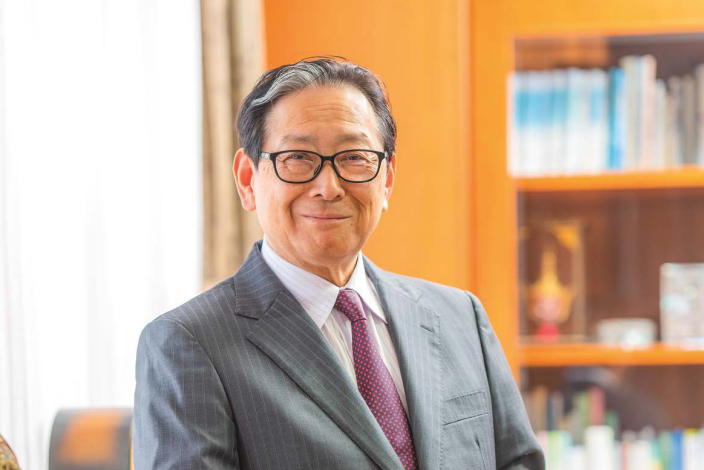
YOSHIDA Kazuhiro
President, Gifu University